Dentures are a removable dental appliance which function to replace missing teeth and supporting soft tissues. They can be made to replace single, multiple or all remaining teeth and are fabricated from materials such as high impact acrylic, cobalt and chrome.
1,100+ reviews (4.8 of 5)

Now available
What are dentures?
Whilst dental implants are fast becoming the ideal replacement for missing teeth, dentures still have many benefits and are a very useful alternative especially in cases where implants and bridges may not be possible.
Dentures can also be connected to implants to improve their stability and retention, which is quite a big problem for many patients with upper and lower complete dentures.
The implants placed in the jaw can have connectors on them which the denture can clip onto. This makes the denture more stable and remains easily cleansable.
Types of dentures
These are the main types of dentures, and how each compares with dental implants:
Full dentures (complete dentures)
A full set of false teeth for an upper or lower jaw with no natural teeth left. They rest on the gums and are held by suction, with denture adhesive if needed.
Partial dentures
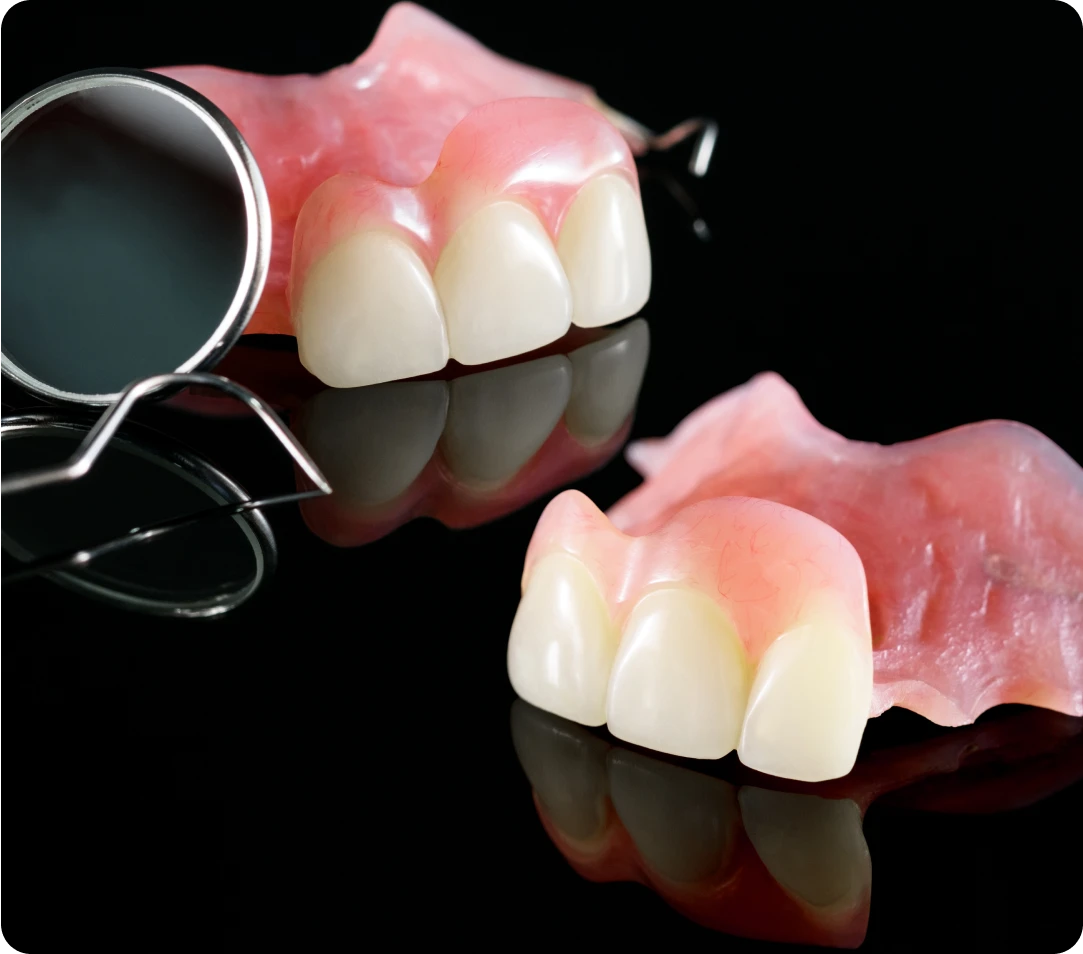
Replace one or several missing teeth when you still have some natural teeth. They clip onto the teeth around the gap. Partial dentures come in different materials:
- Acrylic dentures: a pink plastic base. The most affordable option, and easy to add teeth to later.
- Chrome dentures: a thin cobalt-chrome metal frame that is stronger, smaller and more comfortable to wear long term.
- Flexible dentures: a soft, flexible base with gum-coloured clasps, so there is no visible metal.
Single tooth denture
A small partial denture that replaces just one missing tooth, held by clasps on the neighbouring teeth. A single dental implant replaces the tooth permanently, without a plate or clasps.
Immediate dentures
Made before your teeth are removed, so you are never without teeth. They usually need adjusting or relining as the gums heal.
Implant-supported dentures (permanent dentures)
A denture that clips onto two or more dental implants, so it doesn’t slip when you eat or speak. Fixed, non-removable teeth on four or six implants are known as All-on-4 and All-on-6.
Why choose dental implants instead of dentures?
Dentures are a quick and affordable way to fill a gap, but they have real downsides that implants avoid:
| Common denture problem | How implants solve it |
|---|---|
| Dentures slip or click when you eat and speak | Implants are fixed in the jawbone, so teeth stay put |
| Adhesives and daily removal | Fixed implant teeth are brushed like natural teeth |
| Upper dentures cover the roof of the mouth, which can dull taste | Implant teeth leave the palate free |
| The jawbone shrinks under dentures, so they loosen and the face can look older | Implants stimulate the bone and help preserve it |
| Partial dentures put pressure on the remaining teeth | Implants stand on their own and don’t rely on other teeth |
| Dentures usually need relining or replacing every 5 to 10 years | Implants can last for decades with good care |
Which implant option is right for you?
- One or a few missing teeth: single implants, from £2,500 per tooth, or an implant bridge.
- Loose dentures: implant-supported dentures clip onto two or more implants, so they no longer slip.
- Most or all teeth missing: All-on-4 (from £12,000) or All-on-6 (from £15,000) gives you a full arch of fixed teeth.
- Not enough bone? A bone graft or sinus lift (each from £499) can rebuild it first.
Implant supported dentures
Say goodbye to the inconvenience and discomfort of traditional dentures. Implant-supported dentures offer a revolutionary solution that combines the stability of dental implants with the convenience of removable dentures. Whether you’re missing a few teeth or need full arch replacement, implant-supported dentures can transform your smile and restore your confidence.
Dentures vs implants
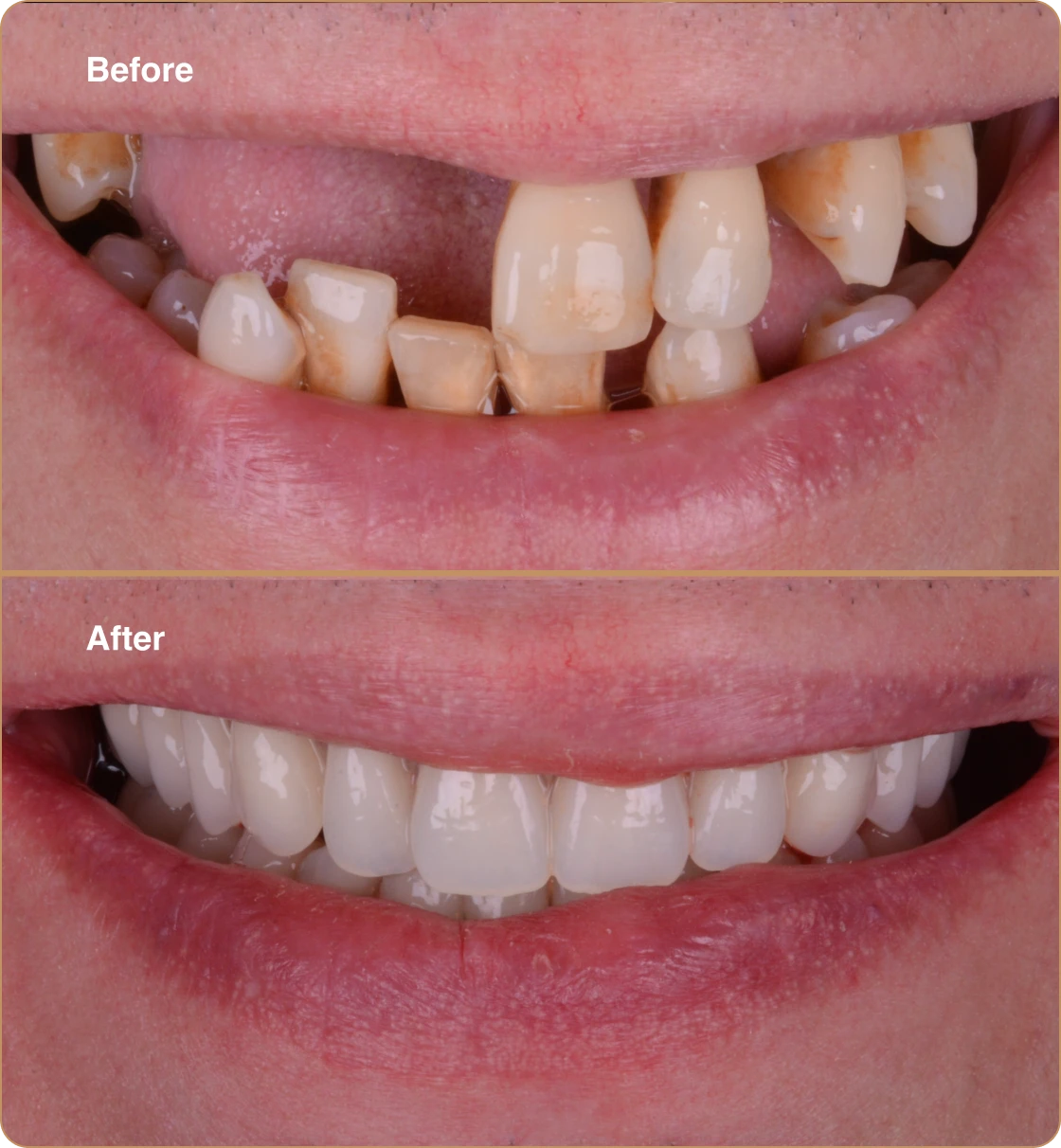
Dentures are removable artificial teeth that sit on the gums. Implants integrate with the jawbone for a longer-term fixed foundation — and can also support a denture.
| Feature | Dentures | Implants |
|---|---|---|
| Durability | Usually last 5 to 10 years before replacement | Can last a lifetime with proper care, integrating with the jawbone |
| Comfort | Initially bulky, may require adjustments | Feel and function like natural teeth |
| Bone Preservation | Do not prevent bone loss, may accelerate it | Stimulate jawbone, preventing bone loss |
| Maintenance | Require daily removal for cleaning | Cleaned like natural teeth |
| Chewing Efficiency | May reduce chewing efficiency | Restore full chewing function |
| Speech | May affect speech initially | Typically do not interfere once integrated |
| Cost | More affordable upfront | Higher initially, often cost-effective long term |
| Aesthetics | Can look artificial if not fitted properly | Natural appearance, blend seamlessly |
| Long-Term Outlook | Need replacement every 5–10 years | Permanent solution with proper care |
Pricing
Dentures vs implants: how much do they cost?
Dentures cost less at the start, but usually need relining and replacing over the years. Implants cost more upfront but are designed to last, and every treatment can be spread over 24 months at 0% finance.
Free consultations · 0% finance over 24 months
Single implant and crown
from£2,500 (from £104/month)
Replacing one tooth permanently
Implant-supported dentures
Priced at your consultation
Dentures that no longer slip
All-on-4
from£12,000 (from £500/month)
A full arch of fixed teeth on four implants
All-on-6
from£15,000 (from £625/month)
A full arch of fixed teeth on six implants
Bone graft or sinus lift
from£499
Rebuilding bone before implants
See every treatment and price on our pricing page.
Already wear dentures?
Switching from dentures to implants
- Free consultation: we check your gums, bone and any remaining teeth, take X-rays and talk through every implant option.
- Planning: your implant positions and new teeth are planned around your bite and smile.
- Implant placement: under local anaesthetic, with sedation available if you are nervous.
- Healing: the implants fuse with the bone over a few months, and you can usually keep wearing a denture in the meantime.
- Your new teeth: fixed teeth or a clip-on denture are fitted to the implants.
How to look after dentures
- Take them out and rinse them after eating.
- Brush them every day with a soft brush and denture cleaner, not ordinary toothpaste, which can scratch them.
- Soak them overnight in water or a denture cleaning solution, so they don’t dry out and lose their shape.
- Keep brushing your gums, tongue and any natural teeth, and have a check-up at least once a year.
If your dentures have become loose, sore or need lots of adhesive, it is usually a sign the bone underneath has changed, and a good time to talk about implants.
Dentures questions
What are dentures?
Dentures are removable false teeth made to replace missing teeth. A full denture replaces all the teeth in one jaw, and a partial denture replaces one or several teeth.
How much do dentures cost privately?
Private denture prices vary with the type and material. At Rüh Dental we focus on dental implants as the long-term alternative: a single implant and crown starts from £2,500, and a full arch of fixed teeth with All-on-4 from £12,000, with 0% finance over 24 months.
How much is a full set of dentures?
A full set of dentures costs less upfront than implants, but usually needs replacing every 5 to 10 years. A full arch of fixed teeth on implants with All-on-4 starts from £12,000 at Rüh Dental.
What are the best dentures to get?
Implant-supported dentures are the most stable, because they clip onto implants and don’t slip. For fixed teeth that never come out, All-on-4 or All-on-6 is the closest thing to natural teeth.
What are flexible dentures?
Flexible dentures are partial dentures made from a soft, bendable material with gum-coloured clasps, so there is no visible metal. They are comfortable and discreet, but harder to add teeth to later.
How does a single tooth denture stay in?
A single tooth denture is held in place by small clasps that rest on the teeth either side of the gap, and by the shape of the plate against the roof of your mouth or gums.
What are permanent dentures?
“Permanent dentures” usually means fixed teeth supported on dental implants, such as All-on-4. They are not removed at home and feel much closer to natural teeth.
How long do dentures last?
Usually around 5 to 10 years. Your gums and bone change shape over time, so dentures may need relining or replacing to keep fitting well.
Can you eat with dentures?
Yes. Start with soft foods for the first few weeks while you get used to them. Very hard or sticky foods are best avoided, especially with full dentures.
Can you sleep with dentures in?
It is best to take them out at night to give your gums a rest and keep them healthy. Soak them in water or a cleaning solution overnight.
How do I clean my dentures?
Rinse them after eating, brush them daily with a soft brush and denture cleaner, and soak them overnight. Avoid ordinary toothpaste and hot water, which can damage them.
Dentures or implants: which is better?
Implants are fixed, protect the jawbone and usually last longer, but cost more and need surgery. Dentures are more affordable and need no surgery. Implant-supported dentures combine the two.
Explore
Related concerns
Read more about replacing missing or failing teeth.

Start your smile journey today
At Rüh Dental, we do things differently. We call it the Rüh difference.
We believe in better than the traditional dentistry of yesteryear that’s left a legacy of fear and therefore neglect because of historic experiences.
Contact Us
Ruh Dental (Fleet Street) Limited (09473949), Ruh Dental (Notting Hill Gate) Limited (10288078) and Ruh Dental (Manchester) Limited (11669648) are registered in England. Registered office: 1st Floor Metropolitan House, Darkes Lane, Potters Bar EN6 1AG.


