

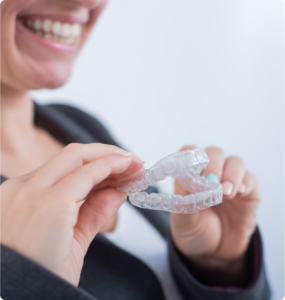
You start Invisalign, you love the discreet look, and you’re excited for the results… until you realise that your clear aligners only stay clear if you take care of them properly. Left uncleaned, they can stain, smell, or get cloudy pretty fast.
Plus, if you’re wearing Invisalign for most of the day, keeping it clean isn’t just about appearance, it’s a key part of making sure your treatment stays comfortable, hygienic and effective.
Because the aligners sit directly against your teeth for 20-22 hours a day, they can quickly collect bacteria, plaque, and stain if they’re not properly taken care of. But the good news is that cleaning Invisalign doesn’t need to be complicated, it just needs to be done right.
Why Cleaning Invisalign Properly Matters
Invisalign creates a sealed environment around your teeth, making a warm, cosy home for bacteria to build up. If not cleaned regularly, plaque can accumulate on the aligners themselves and be reintroduced to your teeth every time you put them back in.
Poor cleaning habits can lead to:
- Bad breath or unpleasant smells
- Cloudy or stained aligners
- Increased plaque buildup on teeth
- Gum irritation or inflammation
- A less comfortable overall Invisalign experience
Clean aligners don’t just look better, but they help protect your teeth and gums throughout treatment, ensuring they stay clear and fresh so that Invisalign is far more pleasant to wear day to day.
How Often Should You Clean Invisalign?
Invisalign aligners should be cleaned every day, with lighter rinsing done whenever they’re removed. Each time you take your aligners out, saliva and bacteria begin to dry onto the surface, so a quick rinse helps prevent buildup from settling, while a more thorough clean once a day removes plaque and bacteria properly.
Even though aligners are replaced every one to two weeks, they’re worn for long periods during that time. Skipping daily cleaning can allow bacteria to accumulate surprisingly quickly, which is why consistency matters far more than using strong or abrasive products.
The Best Way to Clean Invisalign Daily
After removing your aligners, rinse them under lukewarm water to wash away saliva and loose debris. Using a soft toothbrush, gently brush the inside and outside of the aligners with a clear, non-abrasive liquid soap.
Once they’re clean, rinse thoroughly before putting them back in or storing them in their case.
This method is recommended because it removes bacteria without scratching or damaging the aligners, and helps prevent cloudiness and staining while keeping Invisalign fresh and comfortable to wear. Despite how tempting it might be, stronger cleaners aren’t necessary for daily care, as some can actually do more harm than good, which we’ll cover next.
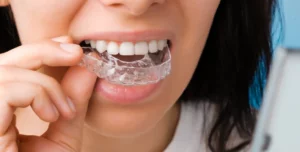
What Should You Avoid When Cleaning Invisalign?
When it comes to cleaning Invisalign, being too aggressive can cause more problems than it solves. Some everyday products seem harmless but can actually damage your aligners over time.
We don’t recommend using toothpaste to clean your aligners, as it is designed to clean enamel, not clear plastic. Many toothpastes contain mild abrasive ingredients that can create tiny scratches on Invisalign aligners, which can contribute to your Invisalign looking cloudy and staining more easily.
Using hot water is another common mistake: heat can warp the plastic, affecting how well the aligners fit and move your teeth.
Alcohol-based mouthwashes and strongly scented or coloured soaps are also best avoided. These products can dry out the aligner, leave an unpleasant taste, or cause discolouration.
How to Remove Stains from Invisalign Aligners
Stains tend to build up gradually, rather than appearing overnight. So even with good daily care, aligners can sometimes develop staining, particularly if they’ve been exposed to tea, coffee, red wine, fizzy drinks, or coloured foods.
If your aligners start to look cloudy or slightly discoloured, a short soak in a mild cleaning solution followed by gentle brushing with a soft toothbrush can help lift surface stains without damaging the plastic.
Preventing stains in the first place is easier than removing them. Taking aligners out for anything other than water, and rinsing them thoroughly with warm water when they’re removed, helps keep them clear and discreet throughout the wear period.
How to Clean Invisalign Retainers After Treatment
Once Invisalign treatment is complete, retainers become a long-term part of maintaining your results, and they need just as much care as aligners did during treatment.
Invisalign retainers can be cleaned using the same gentle methods: daily rinsing, soft brushing, and occasional soaking if needed. Because retainers are often worn for longer periods of time and reused for months or years, consistent cleaning is especially important to prevent bacteria buildup, odours, and staining.
A good retainer cleaning routine helps protect both your oral health and the longevity of the retainer itself, ensuring it continues to fit well and keep your teeth in their new position.
What Cleaning Products Work for Invisalign?
You don’t need specialist or expensive products to keep Invisalign clean, but some options are more suitable than others depending on your routine and needs.
- Clear liquid soap is one of the safest and most effective options for daily cleaning when used with a soft toothbrush and lukewarm water.
- Invisalign cleaning crystals are designed specifically for aligners and can be used occasionally to freshen trays or lift mild staining, though they aren’t essential for everyday care.
- Ultrasonic cleaners can be helpful for people who notice recurring buildup or wear retainers long-term, as they clean hard-to-reach areas using gentle vibrations.
- Retainer or aligner cleaning tablets may be used from time to time, provided they’re non-abrasive and used according to instructions.
Whatever product you choose, it’s important to avoid anything too harsh, and to remember that consistency matters more than complexity.
Invisalign Cleaning Advice from Ruh Dental
At Ruh Dental, we take the time to show patients how to care for their Invisalign properly from the very start.
During your free consultation and fitting appointment, we’ll explain how to clean Invisalign safely, what to avoid, and how to spot early signs of build up or staining. If you move onto retainers after treatment, we’ll also guide you on long-term care to help protect your results.
If you ever have concerns about how your retainers look, feel, or fit, our team is always happy to check them and offer advice. Good cleaning habits make Invisalign more comfortable, discreet and effective, and we’re here to support you through the entire process.
FAQs About Cleaning Invisalign
What kills bacteria on Invisalign?
Regular brushing your Invisalign aligners with a soft toothbrush and clear liquid soap, combined with thorough rinsing, is usually enough to remove bacteria safely. Occasional soaking with approved cleaning products can help if buildup develops.
Can Invisalign go cloudy if not cleaned properly?
Yes – plaque, bacteria and tiny scratches caused by abrasive cleaners can make Invisalign aligners appear cloudy or dull over time. Gentle and consistent cleaning helps keep them clear.
Can I clean Invisalign with vinegar?
Diluted white vinegar can be used occasionally to help loosen buildup, but it shouldn’t replace daily cleaning. Aligners should always be rinsed thoroughly afterwards, and vinegar should never be used too frequently.
Do Invisalign retainers need different care?
The method is very similar to cleaning aligners, but retainers used post-Invisalign treatment often need more consistent, long-term care because they are worn for months or years rather than weeks. Daily cleaning helps keep them hygienic, clear, and fitting correctly.